Jungfraujoch Tour from Zurich — Excursion to the Top of Europe at 3,454 m
The Jungfraujoch tour from Zurich is one of those experiences that leaves a lasting impression. Perched at 3,454 metres above sea level, this Alpine pass known as the 'Top of Europe' offers a spectacle whose grandeur defies description. This Jungfraujoch excursion is also accessible from Lucerne and Interlaken, which serves as the intermediate stop on the route.
From the moment you leave Zurich, your certified guide immerses you in the history and secrets of this legendary region of the Bernese Oberland. The train journey to Grindelwald or Lauterbrunnen is itself a love letter to the Swiss Alps: verdant valleys, traditional chalets and waterfalls cascading down cliff faces create a picture of stunning beauty.
The Jungfrau Railway — a legendary train through the mountain
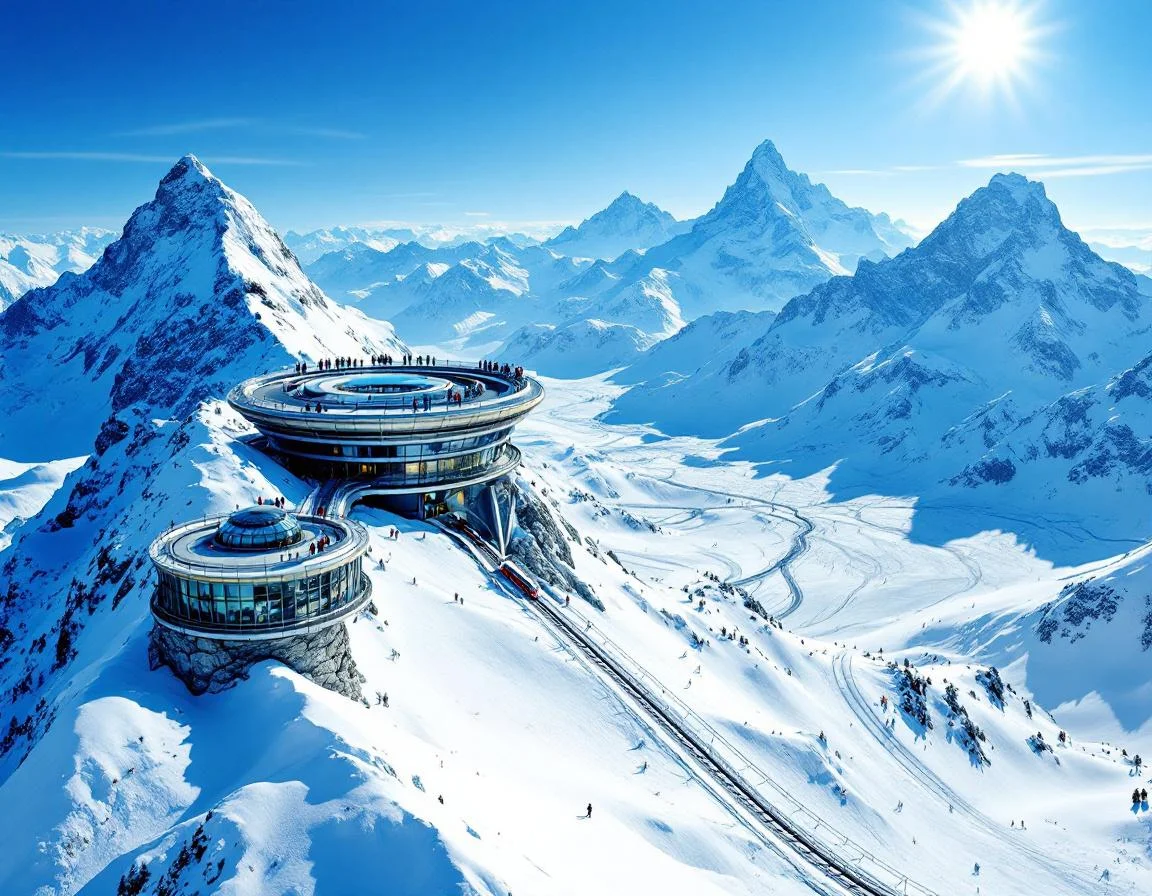
The adventure takes on an extraordinary dimension when you board the Jungfrau Railway, this legendary train inaugurated in 1912. For nearly fifty minutes, the locomotive carries you through the rocky heart of the Eiger and the Mönch, pausing briefly at the Eigergletscher intermediate station for a glimpse through windows carved into the rock. The technical mastery of this feat of engineering remains, over a century later, a triumph of human ingenuity.
Once at the summit, a world of dazzling whiteness opens before you. The Ice Palace welcomes you with sculptures and corridors carved deep into the glacier — a crystal cathedral with turquoise-blue reflections. The Sphinx Observatory panoramic platform, accessible by lift, takes you even higher for a 360-degree panorama across a horizon of peaks: the Mönch, the Jungfrau, the Eiger, and on clear days the Italian and French Alps in the distance.
The Aletsch Glacier and the Sphinx Observatory
Then comes the contemplation of the Aletsch Glacier, a UNESCO World Heritage Site. Stretching 23 kilometres, it is the largest glacier in the Alps, a millennial river of ice extending majestically southward. Seeing it from above evokes a rare emotion, blending wonder with a keen awareness of the fragility of these ice giants.
Your guide accompanies you throughout the day with fascinating insights into the geology, the history of mountaineering and the current environmental challenges linked to glacier retreat. This day is far more than a tourist excursion: it is an encounter with the grandeur of the Alps, an experience that deeply marks all those fortunate enough to live it.
Highlights
- Train journey through the heart of the Eiger and Mönch
- Ice Palace with enchanting sculptures carved from the glacier
- Sphinx platform at 3,571 m with a 360-degree panorama
- View of the Aletsch Glacier, a UNESCO site — the largest in the Alps
- Dedicated certified bilingual guide throughout the day
Detailed Programme
Departure from Zurich
Meet at Zurich Central Station to join your group. Your guide welcomes you and presents the day's programme before boarding the train towards the Bernese Oberland.
Arrival in Grindelwald or Lauterbrunnen
Journey through the Alpine scenery of the Bernese Oberland, between deep valleys and snow-capped peaks. Transfer to the Jungfrau Railway cogwheel train.
Ascent to Jungfraujoch
Spectacular climb through tunnels carved into the Eiger with a stop at the Eigergletscher window. The air thins, the light changes — you're approaching the Top of Europe.
Exploring the summit
Free and guided visit of the Ice Palace, ascent to the Sphinx platform, contemplation of the Aletsch Glacier and surrounding peaks. Opportunity to walk on the eternal snow.
Lunch at the summit (optional)
The summit restaurants offer a selection of hot dishes and Swiss specialities — a unique dining experience at 3,454 metres above sea level.
Return to Zurich
Descent by train, journey through the Lauterbrunnen Valley and return by train to Zurich. Arrival expected in the late afternoon.
Included in the tour
- Round-trip transport from Zurich by comfortable train
- Jungfrau Railway ticket (ascent and descent)
- Entry to the Ice Palace
- Access to the Sphinx panoramic platform
- Certified multilingual guide for the entire day
- Audio headsets if needed
Not included
- Meals and drinks
- Guide tips
- Travel insurance
- Personal expenses
Practical Information
Zurich Central Station (Zürich Hauptbahnhof), main hall, under the clock
07:30
Approximately 18:00
Dress warmly — temperatures range from -5°C to +5°C at the summit even in summer. Waterproof clothing is recommended. In case of reduced visibility, the excursion goes ahead as the train journey remains exceptional. Mild altitude sickness is possible — take time to acclimatise.
What to see in the Jungfrau Region & Bernese Oberland
The Jungfrau Region, a UNESCO World Heritage Site since 2001, is far more than a single summit. It is one of the most spectacular Alpine ecosystems in Europe and offers a density of experiences rarely matched. Whether you have a few extra hours or wish to extend your stay, here is a comprehensive guide to what to see and do around Jungfraujoch.
Interlaken — the town between two lakes
Interlaken, the town between two lakes (Thun and Brienz), is the natural gateway to the region. This resort, nestled in a flat valley between two stretches of turquoise water, offers a frontal view of the legendary Eiger-Mönch-Jungfrau trilogy. The Höheweg, its main avenue lined with Belle Époque hotels and flower gardens, is a pleasant stroll. Thrill-seekers will enjoy paragliding above Lake Brienz, while families can ride the Harder Kulm funicular (1,322 m), Interlaken's viewpoint offering a plunging view of both lakes and the surrounding peaks.
The Lauterbrunnen Valley, accessible by train from Interlaken, is a true natural gem. This U-shaped glacial valley, carved millennia ago, is flanked by vertical 300-metre cliffs from which 72 waterfalls cascade. The Staubbach Falls, visible from the village, were already famous in the 18th century and inspired Goethe during his Swiss journey. The Trümmelbach Falls, accessible by underground lift, are even more impressive: ten glacial cascades surge inside the mountain, draining meltwater from the Eiger, Mönch and Jungfrau at up to 20,000 litres per second.
The Lauterbrunnen Valley and its 72 waterfalls
Grindelwald, the 'Glacier Village', sits at the foot of the Eiger's famous north face. This traditional village has preserved its authentic charm despite its international renown. Grindelwald First (2,168 m), reached by gondola, features the First Cliff Walk — a vertiginous walkway hanging from the cliff — and the First Flyer, an 800-metre zip line over the Alpine pastures. The hike to Lake Bachalp (Bachalpsee) is a classic: in 45 minutes of easy walking, you reach a high-altitude lake where snow-capped peaks are reflected in deep blue waters. The new Eiger Express gondola, inaugurated in 2020, connects Grindelwald to Jungfraujoch in just 45 minutes, making summit access faster than ever.
Lake Brienz deserves an excursion of its own. Its glacial blue waters, fed by Oberland glaciers, are among the purest in Switzerland. Historic BLS steamboats navigate between Interlaken and Brienz, offering spectacular views of forested cliffs and waterfalls plunging directly into the lake. The village of Brienz is famous for its wood-carving tradition and its open-air museum at Ballenberg, featuring over 100 traditional buildings from all regions of Switzerland.
Grindelwald — the Glacier Village
For hikers, the region offers hundreds of kilometres of marked trails. The Panoramaweg from Männlichen to Kleine Scheidegg (1h30) is considered one of the finest panoramic hikes in the Alps, with unbroken views of the Eiger, Mönch and Jungfrau. The Schynige Platte trail, accessible by a historic 1893 cogwheel railway, passes through an Alpine botanical garden with over 650 plant species. The more athletic can attempt the Via Ferrata at Mürren or the North Face Trail at the foot of the Eiger.
As for gastronomy, the region is known for its Alpine cheeses, including Gruyère and Emmental produced in local dairies. High-altitude restaurants like the Piz Gloria atop the Schilthorn (made famous by the James Bond film 'On Her Majesty's Secret Service') combine refined cuisine with exceptional panoramas. Don't miss the meringues with Gruyère cream from the Ringgenberg pastry shop in Meiringen — an iconic dessert of the Bernese Oberland.
Lake Brienz and the Ballenberg Museum
Lake Brienz is one of the purest in Switzerland, with glacial blue waters fed by the Oberland glaciers. Historic BLS steamboats navigate between Interlaken and Brienz, offering spectacular views of forested cliffs and waterfalls. The village of Brienz is famous for its wood-carving tradition and its Ballenberg open-air museum, which presents over 100 traditional buildings from all Swiss regions — farms, mills, bread ovens and artisan workshops reconstructed in a 66-hectare natural setting.
Frequently asked questions about the Jungfraujoch tour
When is the best time to visit Jungfraujoch?
Is it very cold at the top of Jungfraujoch?
Is altitude sickness a risk at Jungfraujoch?
Can children participate in this excursion?
What happens if the weather is bad on the day of the excursion?
Can you do the Jungfraujoch tour from Lucerne or Interlaken?
Similar tours
 Guided Tours in Switzerland Featured
 Mount Titlis — Eternal Snow
The Mount Titlis excursion from Zurich or Lucerne is an exceptional Alpine expedition at 3,020 metres. The legendary Rotair — the world's only revolving cable car — offers a 360-degree panorama of the Swiss Alps. Glacier, vertiginous suspension bridge and permanent snow await.
 Guided Tours in Switzerland Featured
 Pilatus — The Dragon Mountain
The Mount Pilatus excursion from Lucerne with the Golden Round Trip is one of the most iconic in Switzerland. Departing from Lucerne by steamboat on Lake Lucerne, you reach Alpnachstad to board the steepest cogwheel railway in the world. The descent by panoramic gondolas completes a perfect Alpine loop.