Rhine Falls Day Trip from Zurich — Europe's Largest Waterfall
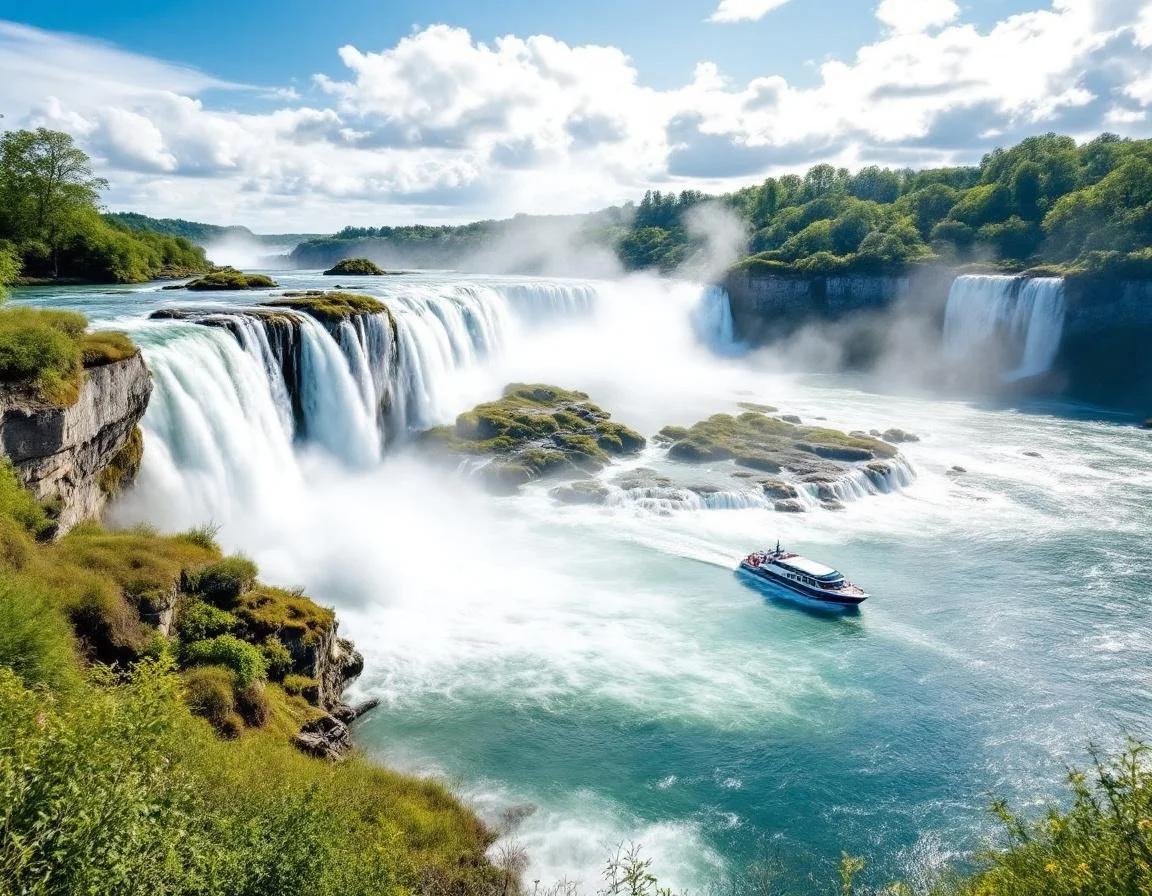
There is something primal and irresistible about the spectacle of the Rhine Falls. It is not the height that impresses — 23 metres is relatively modest — but the sheer force of the flow: 600,000 litres of water per second during peak season, hurled forward with a muted roar that vibrates through the ground beneath your feet. To stand at the edge is to feel the elemental power of water in your bones.
Along the falls, a series of wooden viewing platforms draw you progressively closer to the heart of the action. Each angle reveals a new face of this natural giant: first the sweeping overview from the terraces of Laufen Castle perched above the south bank, then the head-on view from the Neuhausen shore, and finally — the defining moment — the boat crossing to the central rock. Perched just metres from the curtain of water, surrounded by spray and unrelenting thunder, you will understand why 19th-century Romantics crossed all of Europe for this very thrill.
The Rhine Falls — Raw Power and Emotion
Your certified guide illuminates the fascinating geology of the site: the Rhine Falls are the product of the last Ice Age, roughly 15,000 years ago, which dramatically altered the course of the river. The limestone boulders rising from the torrent have stood for 10,000 years, patiently resisting erosion. This geological perspective transforms what might seem like a simple natural spectacle into a living lesson on the deep time of the Earth.
After the sensory overload at Rheinfall, the coach takes you to Stein am Rhein — and the contrast could not be more striking. Here, everything is quiet, delicate, graceful. This small town on the Rhine where it exits Lake Constance is one of the best-preserved medieval ensembles in Europe. The market square, the Unterstadt, is an open-air gallery: every half-timbered house bears a narrative fresco on its facade — mythological or allegorical scenes painted with astonishing precision. Some date from the 16th century; others have been restored with such painstaking care they fool the eye completely.
Stein am Rhein — Frescoes and Medieval Heritage
Wandering through the cobbled lanes of Stein am Rhein is like stepping five centuries back in time, into a Rhenish Switzerland at the crossroads of German, Burgundian and Helvetic influences. A half-day excursion that blends the sublime terror of nature with wonder at human artistry.
Highlights
- Rhine Falls — Europe's largest waterfall by volume
- Boat ride to the central rock in the heart of the falls
- Panoramic viewing platforms with head-on views of the water curtain
- Stein am Rhein — medieval town with fully frescoed facades
- Expert geological and historical commentary from a certified guide
Detailed Programme
Departure from Zurich
Depart by train or coach from Zurich towards Schaffhausen. Your guide sets the scene with an introduction to the history of the Rhine and the geology of the Falls.
Arrival at the Rhine Falls
Explore the panoramic viewing platforms on both banks of the Rhine. Take in the elevated view from Laufen Castle, then move to the head-on perspective from the Neuhausen shore.
Boat Ride to the Central Rock
Board the shuttle boats to reach the central rock. Total immersion in the spray and roar of the water. An unforgettable photo opportunity from the very heart of the falls.
Transfer to Stein am Rhein
A short drive along the banks of the Rhine to the medieval town. Your guide recounts the history of the village and the Benedictine monastery of St. George.
Stein am Rhein Walking Tour
Guided stroll through the cobbled lanes and the market square. Admire the painted facades, browse artisan shops and galleries. Free time for lunch or a lakeside coffee.
Return to Zurich
Depart Stein am Rhein and return to Zurich by late morning or early afternoon, depending on the chosen departure time.
Included in the tour
- Round-trip transport from Zurich by train or coach
- Admission to the Rhine Falls viewing platforms
- Boat ride to the central rock
- Certified multilingual guide
- Guided free time in Stein am Rhein
Not included
- Meals and beverages
- Gratuities for the guide
- Travel insurance
- Waterproof ponchos available for rent on-site (recommended)
Practical Information
Zurich Main Station (Hauptbahnhof), main concourse
09:00
Approximately 14:00
The boat ride to the central rock may be suspended during exceptionally high water levels (spring floods). In summer (July–August) the flow can be lower, but the spectacle remains impressive. Wear clothes you don't mind getting slightly wet when approaching the rock.
What to See Near the Rhine Falls & Stein am Rhein
The Rhine Falls region, straddling the border between the cantons of Zurich and Schaffhausen, offers a unique blend of raw natural power, beautifully preserved medieval heritage and serene riverside landscapes. Beyond the falls themselves, northern Switzerland harbours treasures well worth exploring.
The Rhine Falls — Europe's Mightiest Waterfall
The Rhine Falls (Rheinfall) are the largest waterfall in Europe by volume. Spanning 150 metres wide and dropping 23 metres, they discharge an average of 600 cubic metres of water per second — a volume that can triple during spring snowmelt. The spectacle is awe-inspiring: the mass of water crashes onto the rocks with a deafening roar, sending spray and rainbows dancing in the sunlight. Laufen Castle, perched on the southern cliff, provides an observation platform overlooking the falls and houses a panoramic restaurant. The shuttle boats that carry visitors to the central rock, in the very heart of the cascade, deliver an unforgettable experience — you can physically feel the power of the water from just metres away.
Stein am Rhein — A Medieval Jewel on the Rhine
Stein am Rhein, located 20 km upstream from the falls, is universally regarded as one of Switzerland's most beautiful small towns. Its main square, the Rathausplatz, is a jewel of medieval architecture: the half-timbered house facades are entirely covered in frescoes dating from the 15th and 16th centuries, depicting mythological, historical and allegorical scenes. Each building bears a name — the House of the Sun, the House of the White Ox, the House of the Red Deer — and tells its own story. The Monastery of St. George, founded in the 11th century and impeccably preserved, offers a fascinating glimpse into medieval monastic life with its cloisters, cells and refectory with painted ceilings.
Schaffhausen and Its 170 Oriel Windows
Schaffhausen, capital of Switzerland's northernmost canton, is a human-scale city whose historic centre boasts more than 170 carved and painted oriel windows (bay windows). The Munot Fortress, an imposing circular fort from the 16th century, dominates the city and offers a splendid panorama over the Rhine, the vineyards and the Randen hills. Every evening at 9 pm, the Munot bell still rings — an unbroken tradition spanning more than 500 years that once signalled the closing of the city gates.
The Rhine River and Its Scenic Cruises
The Rhine itself, in this stretch of its course, is a spectacle. The broad, majestic river winds between vine-covered hills and preserved fishing villages. River cruises connect Schaffhausen to Stein am Rhein through bucolic scenery — grey herons, kingfishers and swans populate the banks. The Rhine Cycle Route (Rhein-Route), one of Switzerland's most popular cycling itineraries, follows the river for dozens of kilometres through wine-growing villages.
The Klettgau Wine Region and Pinot Noir
The Schaffhausen wine region is the most important in eastern Switzerland. The Blauburgunder (Pinot Noir) cultivated on the sunny slopes of the Klettgau and Hallau produces elegant red wines that rival the best Pinots in the country. Several wineries open their cellars to visitors for tastings — Weingut GVS Schachenmann in Hallau and Rimuss in Hallau are recommended stops.
Schaffhausen Nature Park and the Randen Trail
The Schaffhausen Nature Park, stretching from the Rhine banks to the Randen hills, offers hikes through pristine landscapes. The Randenwanderung, a 12 km ridge trail, traverses beech forests, flowering meadows and geological remnants of the Jura. In spring, wild orchids and fields of narcissus make this walk a botanical delight.
Hohenklingen Castle, perched above Stein am Rhein, is reachable via a 20-minute trail from the village. This 12th-century fortress, restored and converted into a gourmet restaurant, commands a plunging view over the Rhine, distant Lake Constance and the medieval village below. It is the perfect spot for lunch with a view after exploring the town.
Frequently Asked Questions About the Rhine Falls Tour
Can you get close to the Rhine Falls by boat?
Is Stein am Rhein really worth a visit?
Are the Rhine Falls crowded?
What is the best viewpoint at the Rhine Falls?
How do you get to the Rhine Falls from Zurich?
Similar tours
 Guided Tours in Switzerland Featured
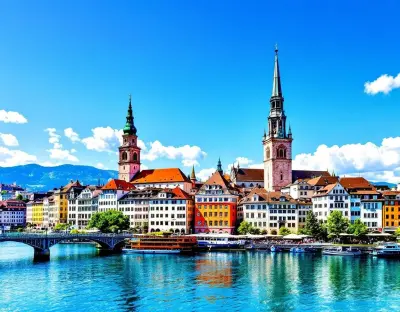
 Zurich — Heart and Soul of the City
At once a global financial capital and a city of human scale, Zurich reveals its depth to those willing to slow down. This guided half-day tour takes you from the Roman Lindenhof to the lakeside, from the Gothic towers of the Grossmünster to the gilded shop fronts of the Bahnhofstrasse, through the medieval lanes of the Altstadt.
 Guided Tours in Switzerland
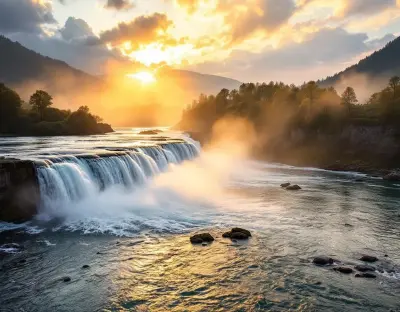
 Rhine Falls at Dawn — The Magic Hour
Visiting the Rhine Falls at dawn is a rare privilege: Europe's largest waterfall by volume, without the crowds, bathed in the golden, misty light of the first hours. An intimate morning excursion that takes you by boat to the central rock and reveals multiple exclusive viewpoints, returning by midday.