Guided Tour of Zurich — 2,000 Years of History on the Lakeside
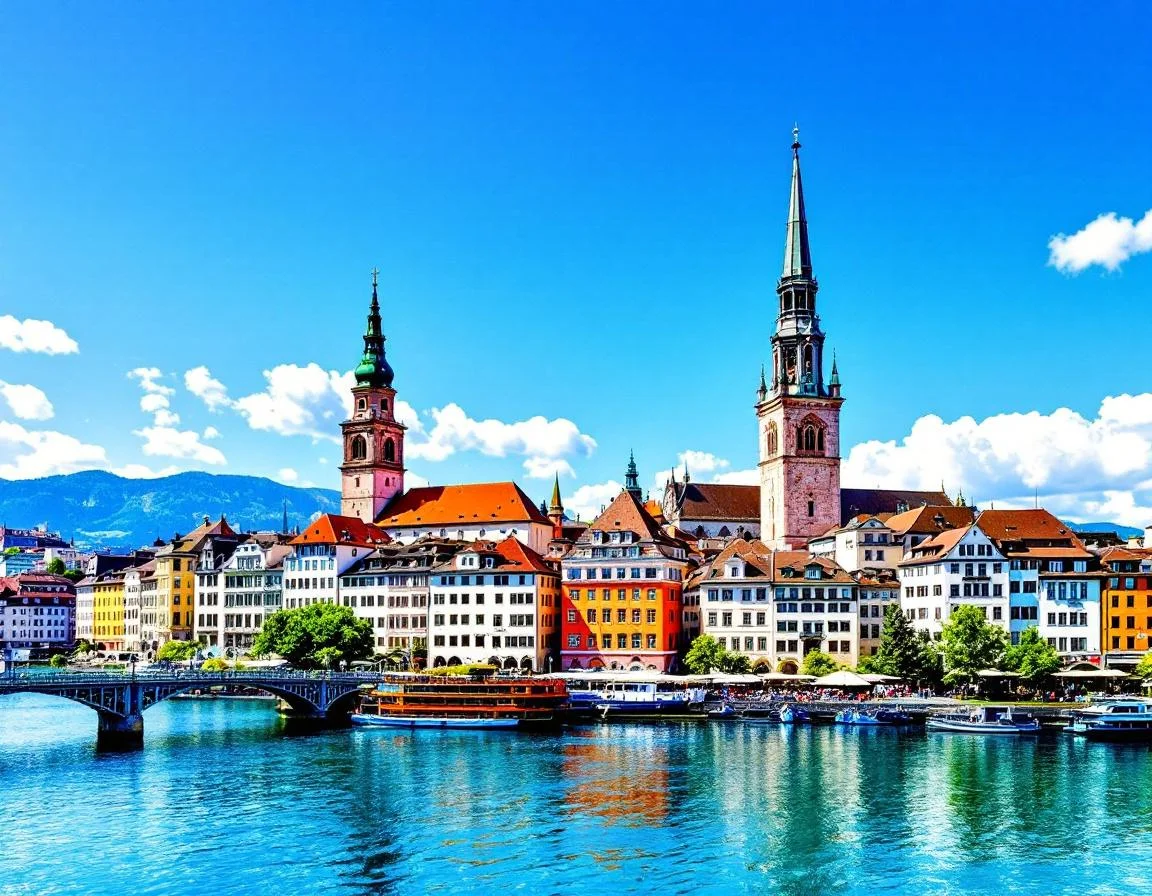
There is something elusive about Zurich's charm. This city, regularly crowned by global rankings as 'the most liveable', possesses a rare quality: it is at once grand and intimate, cosmopolitan and deeply rooted in its history. Discovering it on foot, guided by a passionate expert, is the best way to unlock its secrets.
The walk begins on the Lindenhof, that linden-tree-planted hill from which the Romans administered their outpost two thousand years ago. The flagstones still bear the imprint of that ancient occupation, and the view over tiled roofs and church spires has scarcely changed since the Middle Ages. It is an ideal starting point to understand why Zurich, at the crossroads of Northern and Southern Europe, has always attracted merchants, bankers and thinkers.
The Grossmünster and Zwingli's Reformation
From there, you descend into the labyrinth of the Altstadt, the historic quarter on the left bank of the Limmat. Cobbled lanes with evocative names, timber-framed facades, medieval fountains — every detail is an invitation to slow down and observe. Your guide weaves anecdotes with a storyteller's skill: the merchant guilds, Zwingli's Protestant Reformation, the Dada artists who invented contemporary art in the Cabaret Voltaire in the neighbouring quarter.
The Limmat leads you naturally to the Grossmünster, the Romanesque cathedral whose twin towers have become Zurich's symbol. Inside, Augusto Giacometti's contemporary stained glass bathes the space in coloured light of surprising intensity. From the opposite bank, the Fraumünster responds with its Marc Chagall windows — two artistic visions of the sacred, separated by just a bridge.
The Bahnhofstrasse and Lake Zurich
The Bahnhofstrasse is the final act of this walk: this legendary avenue, one of the most luxurious in the world, is also a monument to the discreet opulence that characterises the Swiss bourgeoisie. Watchmakers, jewellers, chocolatiers and fashion houses mingle with passers-by with an elegance free of ostentation. It ends on the shores of Lake Zurich, where the city seems to catch its breath facing the water and mountains.
A visit to the Swiss National Museum closes this rich and nourishing half-day. Its neo-Gothic architecture is imposing, and its collections trace ten thousand years of human presence on this Alpine territory with intelligence. On leaving, you will feel as though you have travelled through time as much as through space.
Highlights
- Lindenhof — Roman terrace with panoramic view of the old town
- Grossmünster and Fraumünster with their exceptional stained glass
- Medieval lanes of the Altstadt and their historic fountains
- Bahnhofstrasse — one of the most prestigious shopping avenues in the world
- Shores of Lake Zurich and Swiss National Museum
Detailed Programme
Meeting and introduction
Meet at Zurich Central Station and presentation of the day. First historical context on the Roman origins of Zurich, Turicum, and its medieval development.
Lindenhof and old town left bank
Climb to the Lindenhof for the panoramic view, then explore the Altstadt lanes: timber-framed houses, medieval fountains, Latin inscriptions on facades.
The Grossmünster and the Reformation
Visit the Romanesque cathedral and its twin towers. The guide discusses the role of Zwingli and the Protestant Reformation that profoundly shaped Zurich's identity. Views of the Limmat from the bridge.
Fraumünster and Chagall's stained glass
Cross the Limmat to discover the Fraumünster and Marc Chagall's five windows — a masterpiece of modern art in a medieval setting. Explore the Niederdorf quarter.
Bahnhofstrasse and Lake Zurich
Walk up the Bahnhofstrasse with its prestigious shop windows to the lakeshore. A contemplative pause facing the waters of Lake Zurich and the snow-capped Alpine horizon.
Swiss National Museum
Brief visit to the main halls of the Landesmuseum for a plunge into ten thousand years of Swiss history. End of excursion in front of the museum, steps from the station.
Included in the tour
- Certified bilingual or multilingual guide for 4 hours
- Individual audio headsets for comfortable group listening
- Entry to the Swiss National Museum
- Old town map
- Local recommendations booklet (restaurants, shops)
Not included
- Transport to Zurich
- Meals and drinks
- Tips
- Travel insurance
Practical Information
Zurich Central Station (Hauptbahnhof), main exit on the Bahnhofplatz side, by the fountain
09:30 or 14:00 (depending on chosen slot)
Approximately 13:30 or 18:00
The walk is entirely on foot over cobblestones — comfortable shoes are essential. The tour runs in all weather. Most outdoor sites are free; only the national museum requires the entry included in the tour.
What to see in Zurich & surroundings
Zurich is far more than the financial centre of Switzerland. The country's largest city with 430,000 inhabitants, it combines medieval heritage, an avant-garde cultural scene and an exceptional natural setting on the shores of Lake Zurich and the Limmat. Here is a comprehensive guide to discovering this cosmopolitan metropolis and its surroundings.
The old town and the Lindenhof
Zurich's old town (Altstadt) is divided into two distinct banks linked by historic bridges. The left bank houses the Lindenhof, a hill shaded by century-old linden trees offering the finest viewpoint over the river and city rooftops. It was here that the Romans founded the camp of Turicum 2,000 years ago. The Grossmünster, a 12th-century Romanesque church with its recognisable twin towers, is Zurich's emblematic monument — it was here that reformer Zwingli launched the Protestant Reformation in 1523. Climbing the south tower (187 steps) rewards with a spectacular panorama of the city and the Alps.
The Bahnhofstrasse, stretching 1.4 km between the station and the lake, is one of the most prestigious shopping avenues in the world. Lined with luxury boutiques, department stores like Jelmoli (the country's oldest, founded in 1833) and renowned chocolatiers, it is entirely pedestrianised and perfect for strolling. The Sprüngli confectionery, a Zurich institution since 1836, is famous for its Luxemburgerli — delicate airy macarons in a dozen flavours.
The Bahnhofstrasse and Sprüngli
The Niederdorf quarter, nicknamed 'Dörfli' by locals, is the living heart of the old town. Its medieval pedestrian lanes are packed with vintage shops, independent bookstores, bohemian cafés and small restaurants serving local specialities. In the evening, the atmosphere transforms as bars and clubs open, making this the centre of Zurich nightlife. The Cabaret Voltaire, at Spiegelgasse 1, is the historic birthplace of the Dada movement in 1916 — Hugo Ball, Tristan Tzara and Hans Arp invented modern art in a smoky café.
Lake Zurich (Zürichsee) is the city's green lung. Its landscaped shores offer kilometres of walks, public beaches (the Badi), gardens and parks. The Zürichhorn, on the east bank, houses the Pavillon Le Corbusier — the architect's final work — and the Chinese Garden, a gift from twin city Kunming. In summer, Zurichers swim in the lake and the Limmat, a centuries-old tradition facilitated by numerous Flussbad (river baths) like the Frauenbad and Männerbad, 19th-century wooden structures.
The Niederdorf quarter and the Cabaret Voltaire
The Kunsthaus Zurich, one of Switzerland's most important art museums, was expanded in 2021 by architect David Chipperfield. Its permanent collection spans six centuries, from the Renaissance to contemporary art, with exceptional collections of Giacometti, Monet, Chagall and Munch. The Swiss National Museum (Landesmuseum), housed in a neo-Renaissance castle adjacent to the station, traces Swiss cultural history from origins to the present day.
The Uetliberg (871 m), 'the mountain of the Zurichers', is accessible in 20 minutes by train from the central station. Its summit offers a 360° panorama of the city, the lake, the Swiss Plateau and the Alpine chain in clear weather. The Uetliberg-Felsenegg panoramic trail (Planetenweg), following the ridge for 6 km, is an easy and spectacular hike with views on both sides. The descent to Adliswil is by the Felsenegg cable car.
Lake Zurich and the public baths
Rapperswil, nicknamed the 'Town of Roses', is accessible in 40 minutes by train or boat from Zurich. Its 13th-century medieval castle overlooks the lake and houses a local history museum. The town's three rose gardens, with over 15,000 roses of 600 varieties, are in full bloom from June to October. The Holzsteg, an 841-metre wooden walkway across the lake, is the longest pedestrian wooden walkway in Switzerland.
As for gastronomy, Zurich is famous for Zürcher Geschnetzeltes — sliced veal in cream sauce served with rösti — as well as its international dining scene with 24 Michelin-starred restaurants, the most of any Swiss city.
Museums and culture — Kunsthaus and Landesmuseum
The Kunsthaus Zurich, expanded in 2021 by architect David Chipperfield, is one of the most important art museums in Switzerland. Its permanent collection spans six centuries, with exceptional collections of Giacometti, Monet, Chagall and Munch. The Swiss National Museum (Landesmuseum), housed in a neo-Renaissance castle adjacent to the station, traces Swiss cultural history from origins to the present day with interactive exhibitions and remarkable collections.
Frequently asked questions about the Zurich guided tour
How long does the Zurich guided tour last?
Is the Zurich tour suitable for children?
Can you swim in Lake Zurich?
What are the best neighbourhoods for dining in Zurich?
Similar tours
 Guided Tours in Switzerland
 Rhine Falls & Stein am Rhein — Between Sky and Water
This Rhine Falls day trip from Zurich pairs two wonders of northern Switzerland: the Rhine Falls, Europe's largest waterfall by volume, and the medieval village of Stein am Rhein, whose half-timbered facades adorned with 16th-century frescoes look like something out of a fairy tale.
 Guided Tours in Switzerland Featured
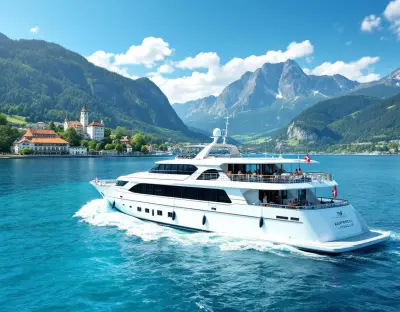
 Zurich, Lake Cruise & Lindt Chocolate
This day trip combines the serenity of a Lake Zurich cruise, the charm of Rapperswil — the 'City of Roses' on the waterfront — and the indulgence of the Lindt Home of Chocolate in Kilchberg, one of the world's most spectacular chocolate museums. A gentle, delicious excursion perfect for the whole family.